Overview
Strategic thinking is one of the most sought-after leadership capabilities in today's business environment. Leaders are increasingly expected to navigate uncertainty, balance competing priorities, allocate limited resources, and make decisions that drive both short-term performance and long-term success.
In this case study, Advantexe used simulation-based learning to help leaders strengthen their strategic thinking capabilities by experiencing realistic business challenges, evaluating trade-offs, and understanding the consequences of their decisions in a dynamic business environment.
The Challenge
A global organization recognized that many of its managers and emerging leaders excelled at execution but had limited opportunities to develop strategic thinking skills.
While participants were effective at managing day-to-day operations, they often struggled to:
- Balance short-term performance pressures with long-term strategic goals
- Prioritize competing initiatives and resource demands
- Anticipate the downstream impact of decisions across the organization
- Navigate ambiguity and uncertainty
- Align decisions with broader business objectives
Leadership wanted a practical development experience that would allow participants to think beyond their functional responsibilities and develop a more enterprise-wide perspective.
Solution
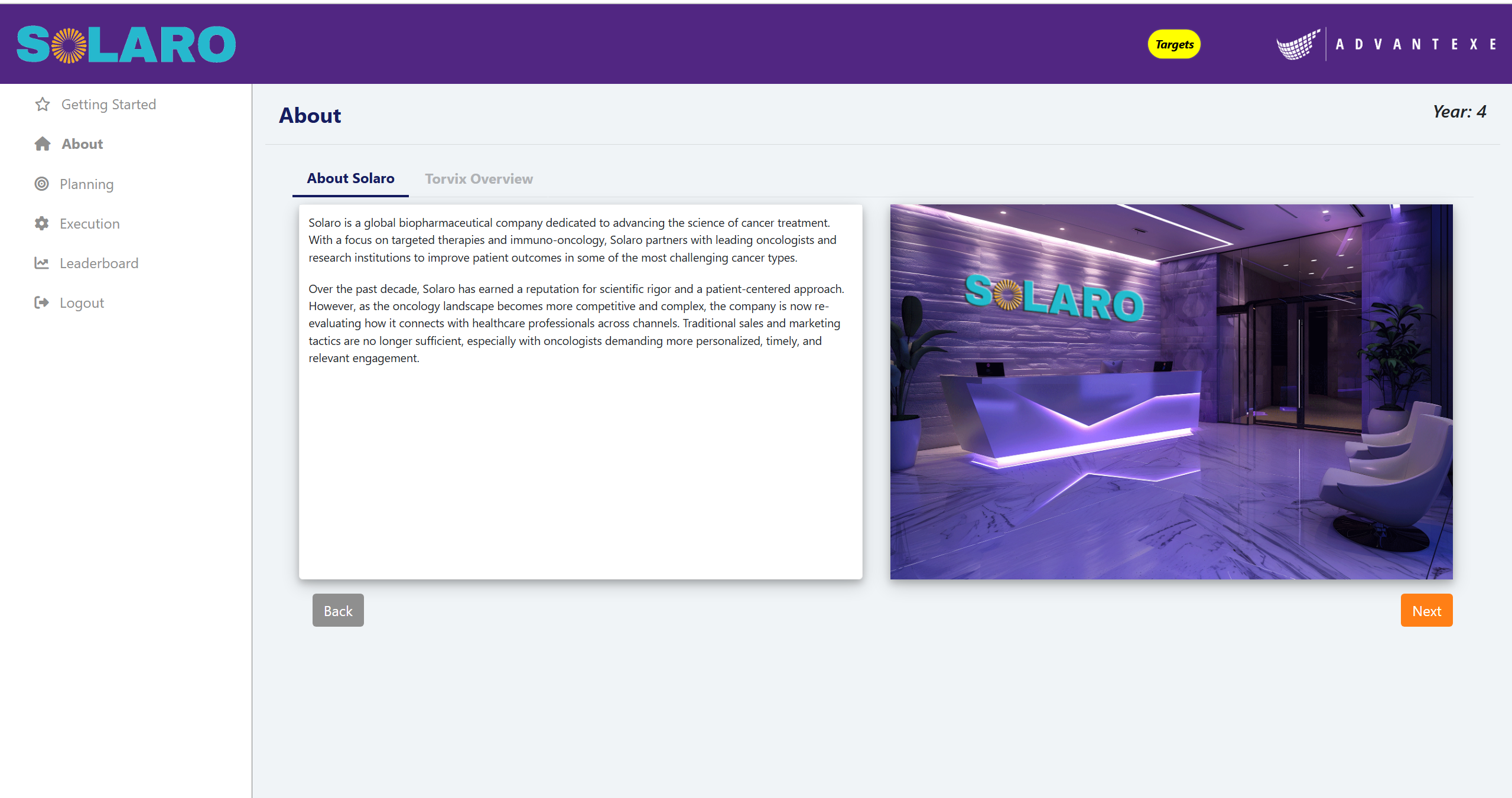
The organization partnered with Advantexe to implement a Strategic Thinking Micro-Simulation designed to immerse participants in a realistic leadership environment.
The experience included:
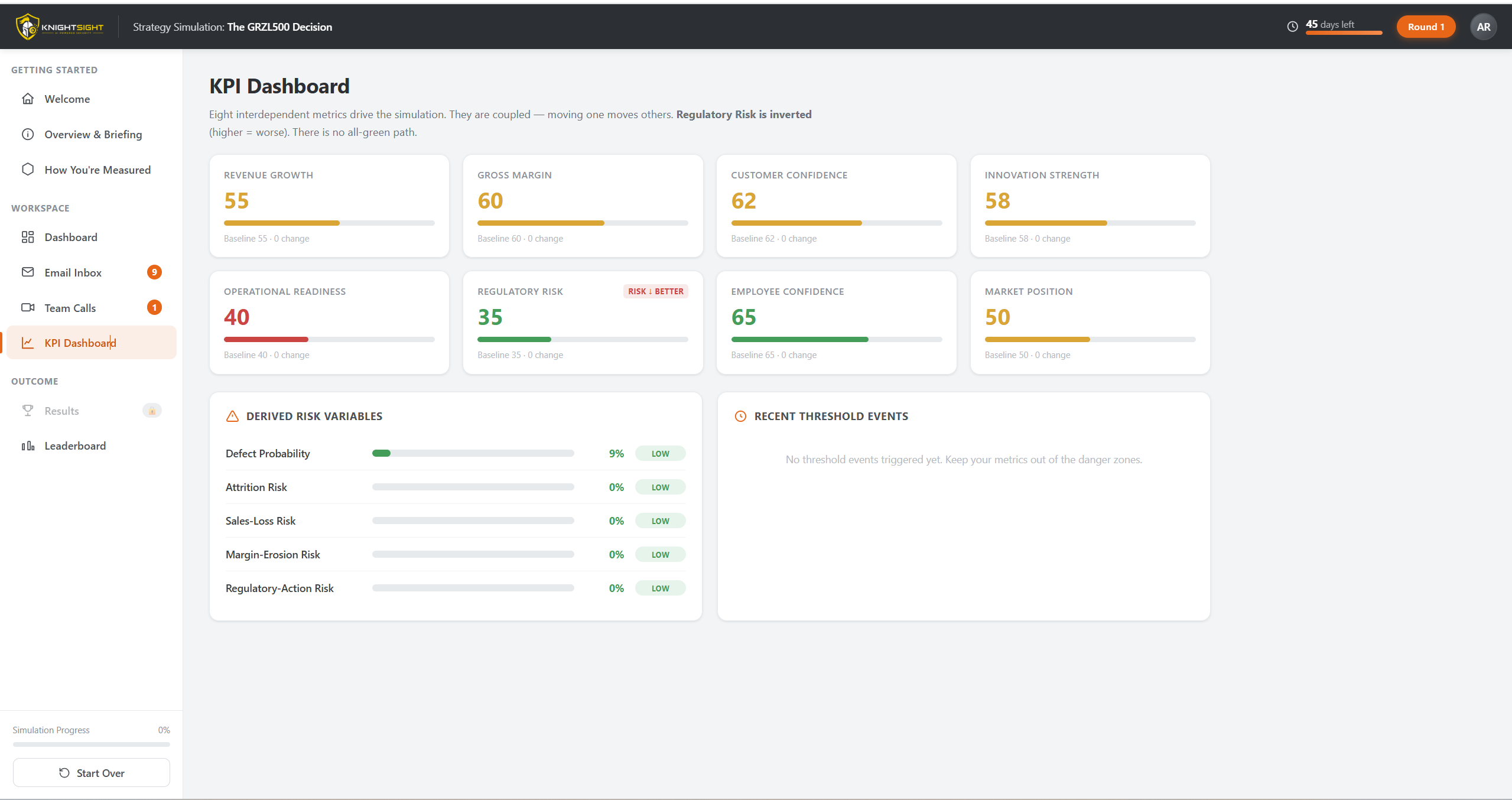
- A business simulation where participants managed a growing organization facing changing market conditions, stakeholder pressures, and resource constraints
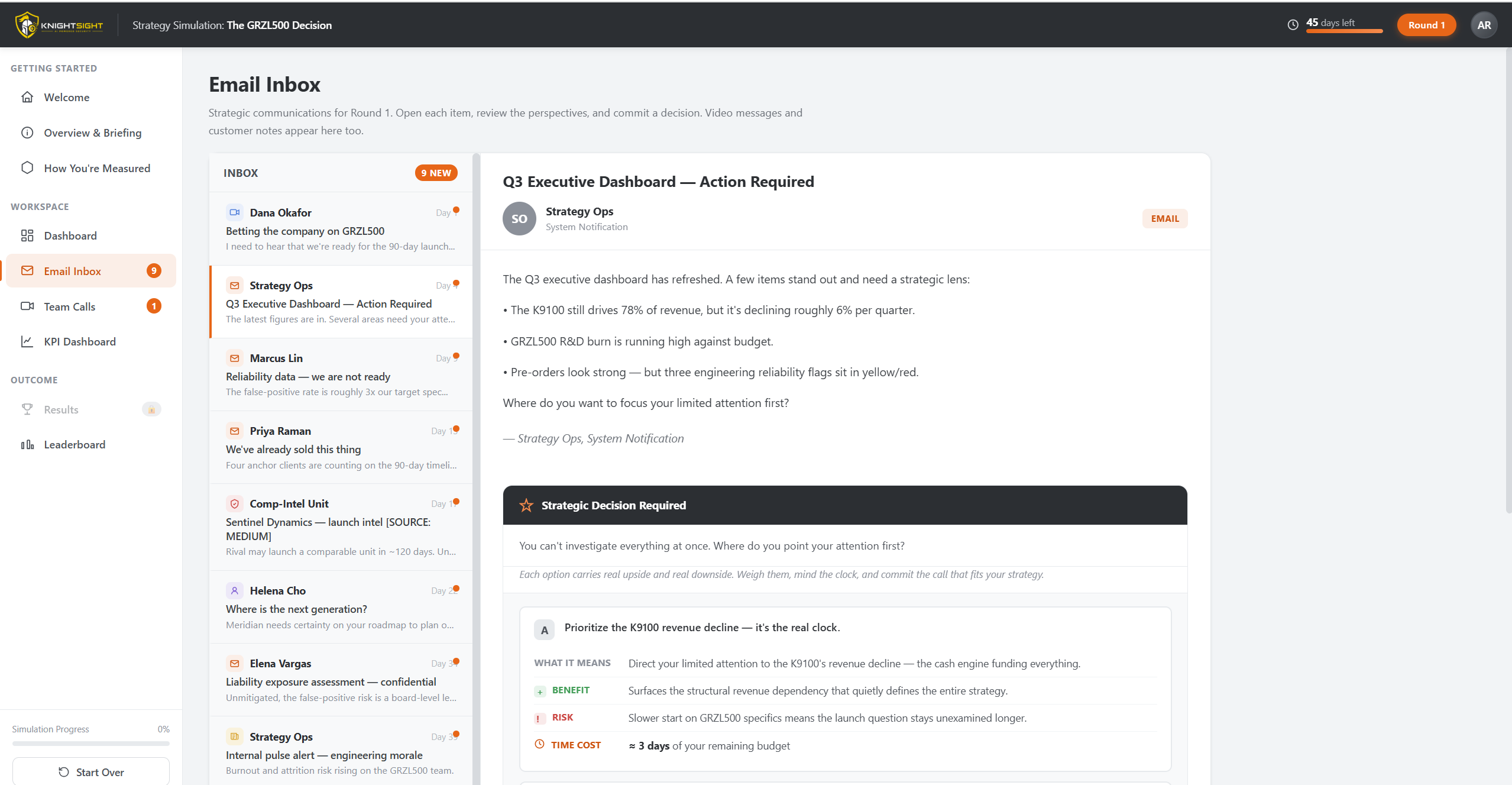
- Realistic inbox challenges requiring participants to prioritize issues, evaluate risks, and make difficult trade-offs
- Strategic decision points involving growth opportunities, talent investments, customer demands, operational efficiency, and innovation initiatives
- Immediate feedback showing how decisions impacted business performance, organizational effectiveness, and long-term outcomes
- Facilitated discussions and reflection activities connecting simulation experiences to participants' real-world leadership challenges
Results
The program delivered immediate improvements in participants' confidence and strategic decision-making capabilities:
- 89% of participants reported increased confidence in making decisions under uncertainty
- 93% indicated a stronger understanding of how decisions in one area affect outcomes across the organization
- Participants demonstrated improved prioritization and resource allocation skills during simulation exercises
- Leaders reported more strategic discussions within their teams following the program
- Managers showed greater awareness of long-term consequences when evaluating short-term opportunities
Participant Quote:
"This experience challenged me to slow down and think more strategically. I realized how often I focus on solving the immediate problem without considering the broader business implications. The simulation helped me see the connections between decisions, priorities, people, and results."
Conclusion
By providing leaders with a realistic environment to practice strategic decision-making, the organization accelerated the development of critical strategic thinking capabilities. Participants gained a broader business perspective, improved their ability to navigate complexity, and became more effective at balancing short-term execution with long-term organizational success.
Frequently Asked Questions About Business Acumen for Sales Professionals
1. What is strategic thinking?
Strategic thinking is the ability to analyze complex situations, identify patterns and opportunities, anticipate future challenges, and make decisions that support long-term organizational goals.
2. Why is strategic thinking important for leaders?
Leaders face increasing levels of complexity, uncertainty, and change. Strategic thinking helps leaders prioritize effectively, allocate resources wisely, manage risk, and align decisions with broader business objectives.
3. How can organizations develop strategic thinking skills?
Strategic thinking develops through experience, reflection, coaching, and opportunities to make decisions in realistic business situations. Simulation-based learning provides a safe environment to practice these skills while receiving immediate feedback.
4. How do business simulations improve strategic thinking?
Business simulations place participants in realistic leadership situations where they must analyze information, evaluate alternatives, manage competing priorities, and make decisions under uncertainty. Participants experience the consequences of their choices and learn from the outcomes.
5. What skills are developed through strategic thinking simulations?
Strategic thinking simulations typically strengthen prioritization, decision-making, systems thinking, resource allocation, risk assessment, stakeholder management, and long-term planning capabilities.