


The 2026 Winter Olympics in Milan-Cortina are experiencing a massive viewership rebound, with NBC reporting a 93% increase in U.S. audience over 2022, averaging 26.5 million viewers in the first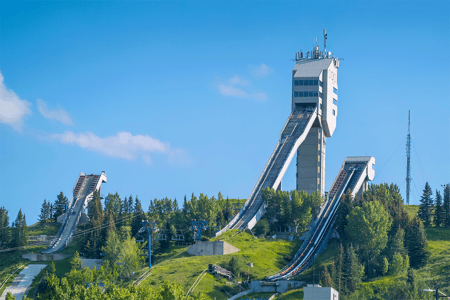 five days. Driven by favorable time zones and heavy streaming on Peacock, it is the most-watched Winter Games in decades.
Most of the coverage focuses on the medal rounds and who ends up on the podium. That’s the part we tend to see, the medals… gold, silver, bronze.
What we don’t see nearly as much of is the effort and investment that gets them there.
Every so often, the broadcast steps back to share an athlete’s backstory, including years of training, coaching, and behind-the-scenes practice. One story that stood out was about ski jumpers. To train safely, they repeatedly jump into a pool of water, working on form, timing, and control. It’s not glamorous. It’s hard and repetitive work, and it’s not something most people ever notice, but it’s a critical part of how they improve.
That’s what training really looks like.
In 2026, we’re seeing a very different approach in the business world. People skip training sessions, leave early, or scroll on TikTok during them. Training budgets are being questioned or reduced amid economic uncertainty, tariffs, and global pressures. Training is often viewed as optional, deferred, or, worse yet, eliminated due to budget cuts.
The problem is that this is usually when training matters most.
People and companies don’t get better by accident. Companies don’t outperform expectations by hoping skills will develop on their own. Athletes don’t win medals because they showed up once. Progress comes from focused practice, coaching, and a consistent investment in improvement.
Training in today’s work environment doesn’t have to mean aformal, 40+ hour learning program. But that doesn’t mean those larger learning events aren’t important. In fact, they’re often among the most valuable opportunities for people to step back, build shared understanding, and connect the dots across the business. When you have the chance to attend a focused learning program, treat it as an athlete would a training camp: show up prepared, stay engaged, and give it your full attention. You rarely get those moments back.
Outside of those larger events, training can, and should, continue in smaller, more flexible ways. In business, that might mean taking the time to attend your company’s earnings call. Not just listening while multitasking, but really paying attention to what leadership is saying, how they explain performance, where they spend time, and what questions analysts are asking. It’s about understanding what’s driving results, what’s creating pressure, and where the business is headed.
The same applies to other forms of practice, such as running a short simulation to test pricing or investment trade-offs, practicing a difficult conversation through an AI-based role-play, or spending ten focused minutes on a targeted micro-lesson. None of these feels like big events, but together they build, reinforce, and extend what’s learned in more formal settings.
At Advantexe, we recently launched Business IQ, a suite of 25 short business acumen videos designed to support this kind of learning, practical, accessible, and easy to fit into a busy schedule. Not every situation calls for a full program, but ongoing development is always required.
That’s the real takeaway from the Olympics.
The results are visible. The training usually isn’t.
If you want to grow your career, lead more effectively, or help your company navigate uncertainty, the answer isn’t less learning; it’s more intentional learning. Lifelong development isn’t a slogan; it’s anecessity.
Whether you’re an Olympic athlete or a business leader, the rules are the same:
If you stop training, you stop improving.
And improvement doesn’t happen because you hope it will.