

Twelve weeks ago, I nearly died.
After contracting a serious staph infection following what was supposed to be a routine hip replacement, I was rushed into emergency surgery for a complicated revision procedure. The infection had spread beyond the hip, affecting surrounding bone and muscle, and the surgical team had to do extensive work to remove the infection and reconstruct the joint.
I won't bore you with all the medical details, but I can assure you that it was not an experience I would recommend to anyone. I have spent my career helping business leaders make better decisions, but suddenly, I was in a situation where I had absolutely no control over the decisions being made. I had to trust the doctors, nurses, and medical professionals working to save my life.
During my hospital stay and recovery, I was introduced to an entirely new world of medical devices and technology. Infusion pumps, wound vacs, PICC lines, and sophisticated monitoring equipment became an essential part of my daily existence. While I was scared out of my mind, I also found myself appreciating the extraordinary combination of medical expertise and technology helping me survive and recover.
Little did I know that three months later, I would have the opportunity to thank some of the people responsible for bringing that technology into hospitals.
The Real Deal Sales Conference
Fast forward to this week.
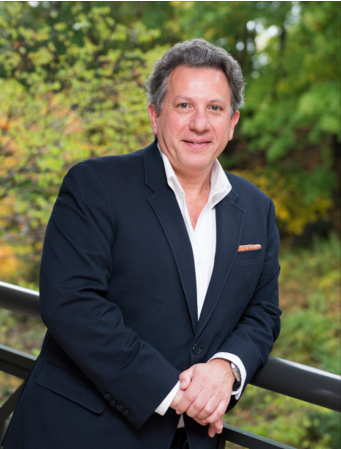
With a cane in one hand and tremendous gratitude in my heart, I walked onto a stage in front of approximately 300 sales professionals to facilitate a three-hour learning experience called the Real Deal Sales Simulation.
But this wasn't just another group of sales professionals.
These were people who wake up every morning and work with hospitals, physicians, nurses, purchasing departments, and healthcare executives to provide the medical devices and technologies that help save lives.
In other words, they sell the very same types of products that had helped save mine.
As I looked out at the audience, the irony was almost overwhelming. Here I was, someone who had spent decades designing business acumen and strategic selling simulations, getting ready to help medical technology sales professionals become even better at their jobs.
And just a few months earlier, I had been on the receiving end of the value they help deliver.
So, before we started, I thanked them.
I told the audience about my experience and said, "Thanks for selling those infusion pumps to the hospital I was in. I might not be standing here today if it weren't for people like you."
It was a moment I will never forget.
And then, because I am still a business simulation guy at heart, I explained that the best way I could thank them was to put them through three hours of challenging sales scenarios designed to make them even better at what they do.
Somehow, that seemed like a perfectly reasonable way to express my gratitude!
The Real Deal Sales Simulation
The learning experience we designed was a little different from traditional sales training.
Instead of PowerPoint presentations explaining the latest sales methodologies or inspirational speeches about winning, we built a sophisticated simulation around two actual sales opportunities that had been successfully won by account teams within the organization.
These weren't fictional cases created by a training department. They were real deals involving real customers, real competitors, real challenges, and real decisions.
Working in teams of up to 10 people, participants stepped into the shoes of the actual account teams and navigated the same strategic selling situations. They analyzed customer needs, evaluated stakeholder relationships, considered competitive threats, and made decisions about how to advance the opportunities.
And just like in the real world of strategic selling, there wasn't always one obvious answer.
After each round, participants received feedback comparing their decisions with those made by the actual account team. Then came one of my favorite parts of the experience.
The real account team came onto the stage, shared the story behind the deal, explained their thinking at critical moments, and answered questions from their colleagues.
Think about the power of that experience.
Instead of simply hearing someone describe a successful sales strategy, participants had already wrestled with the decisions themselves. They had debated alternatives, experienced the consequences of their choices, and developed their own perspectives before hearing what actually happened.
That is a fundamentally different learning experience.
The Power of Practice
One of the things that has always fascinated me about professional selling is how little structured practice many sales professionals actually get.
Professional athletes spend significantly more time practicing than competing. Airline pilots train in flight simulators to prepare for situations they hope never happen. Surgeons spend years developing their skills before taking responsibility for complex procedures.
Yet in sales, we often expect people to develop their capabilities primarily through experience, occasional coaching, and the annual sales meeting.
We give them a sales methodology, some product training, a CRM system, and a quota, and then send them out to compete.
And when something goes wrong, we conduct a pipeline review and ask what happened.
That doesn't make a lot of sense to me.
Strategic selling is an incredibly complex business discipline. Successful sales professionals must understand their customers' strategies, financial performance, competitive challenges, organizational dynamics, and decision-making processes.
They also need to recognize that what makes sense to one stakeholder may be completely unacceptable to another. A physician may be focused on clinical outcomes, while a hospital administrator worries about operating costs. Procurement evaluates pricing, while finance examines return on investment and capital allocation.
The sales professional must connect these perspectives and demonstrate how a solution creates value for the entire organization.
That requires much more than product knowledge and a good presentation. It requires business acumen, strategic thinking, and the ability to make good decisions under pressure.
And those capabilities improve with practice.
The beauty of a well-designed simulation is that participants can experiment with different approaches, make mistakes, learn from the consequences, and try again without putting an actual customer relationship or multimillion-dollar opportunity at risk.
In other words, we can lower the cost of failure while increasing the quality of learning.
From an Annual Event to Continuous Learning
As much as I enjoyed facilitating the Real Deal Sales Simulation, I believe the most exciting part is what comes next.
For decades, companies have invested enormous amounts of money in annual sales conferences. They bring hundreds of sales professionals together, spend significant amounts on travel, hotels, and entertainment, and then try to squeeze an entire year's worth of learning into a few days.
Everyone leaves energized and excited about the future.
And then Monday morning arrives.
Customer issues need attention, forecasts need updating, and the pressures of delivering the quarter quickly take over. Much of what was learned starts to fade.
This is why I believe the future of strategic selling development needs to shift from episodic training events to continuous, simulation-based learning.
Imagine extending the Real Deal approach throughout the year. Every month or quarter, sales professionals could engage in a new scenario based on an actual customer opportunity, competitive challenge, or strategic selling situation.
One scenario might focus on displacing an entrenched competitor. Another could challenge participants to defend a premium price or rescue a deal that appears to be slipping away.
Managers could use these experiences to facilitate coaching conversations, compare alternative approaches, and reinforce the organization's strategic selling methodology.
And with the continued evolution of AI and simulation technology, these experiences can become increasingly dynamic, personalized, and accessible.
There is also a tremendous opportunity to capture the institutional knowledge of an organization's best sales professionals. Rather than allowing their experience to remain locked inside their heads, companies can turn important wins, losses, and competitive battles into learning experiences for everyone.
That is how a successful deal becomes more than a revenue achievement. It becomes an organizational asset.
The Real Value of Strategic Selling
As I reflect on this experience, I keep coming back to something that struck me while I was lying in that hospital bed.
We spend a tremendous amount of time in sales talking about revenue, quotas, market share, competitive positioning, and winning deals. Those things are obviously important. I run a business, and I certainly understand the importance of generating revenue and delivering profitable growth.
But sometimes we forget what is actually being sold.
In the medical technology industry, sales professionals aren't simply selling infusion pumps, surgical instruments, or monitoring systems. They are helping healthcare organizations deliver better care, improve outcomes, and provide clinicians with the tools they need to do their jobs.
The same principle applies across virtually every industry.
Great strategic selling isn't about convincing a customer to buy something they don't need. It is about deeply understanding the customer's business and demonstrating how your solutions can help them achieve meaningful results.
For me, this week's experience brought those ideas together in a very personal way.
Twelve weeks ago, I was lying in a hospital bed, surrounded by medical technology, hoping that the combination of great people and great equipment would get me through an incredibly difficult situation.
This week, I was standing in front of 300 sales professionals, challenging them to make better decisions so they could bring even more value to the hospitals and healthcare professionals they serve.
I have facilitated hundreds of business simulations over the years, but this one was different.
And to all the medical technology sales professionals out there, I want to say thank you.
You may think you're selling products and working to make your numbers. But somewhere, in a hospital room, there may be a patient whose life depends on the value you helped deliver.
I know, because I was one of them.