


During COVID, virtual learning was not a choice. It was the only option to deliver the critical skills employees needed to do their jobs. And as quickly as everything went virtual, things shifted back to in-person because “people missed being around people.” At Advantexe, we are now seeing about 50 percent of our programs delivered face-to-face again.
But the environment is changing yet again! Rising travel costs, tighter budgets, and ongoing instability in parts of Europe and the Middle East are starting to introduce friction. It is not enough on its own to force a shift, but it is enough to make organizations rethink when and how they bring people together for training.
As we start to see more virtual delivery, the question becomes how to create the same level of engagement, alignment, and learning regardless of format. That is where many virtual programs struggled in the past. Too passive. Too easy to disengage and multitask. Too far removed from real work.
What works now is different. Virtual learning needs to be built around the skills and competencies that actually matter. Instead of page turners on Zoom, Teams, or Webex, immersive business simulations play a much bigger role. Learners are running a business, making decisions, and seeing the impact. When learning is built around real trade-offs and consequences, engagement changes. It creates energy, even in a virtual setting, because people are involved in something that feels real.
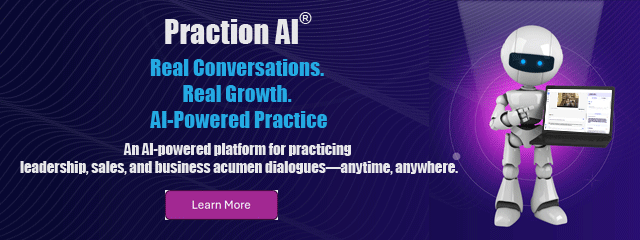
In addition to simulations, AI is now offering a powerful way to build real-world skills. Advantexe’s Praction AI is designed to close the gap between knowing and doing. It is an AI-powered role-play platform where learners practice business conversations like presenting a strategy, handling a customer discussion, or responding to a challenge from a manager. They receive immediate feedback on how they communicate and how well they connect their thinking to business outcomes.
So is virtual learning back? Well, maybe not exactly. But if current trends continue, organizations may shift more quickly than expected. What we are seeing is a more selective approach. In-person is used where it matters most, while virtual is used to scale and reinforce learning. In both cases, the expectation is the same. The experience needs to be focused, interactive, practical, and tied to the critical skills a company needs.
If you are attending ATD in Los Angeles from May 17 to 20, stop by Booth 1938. We will be showing how simulations and AI are being used to make both virtual and in-person learning more effective.